The Square and the Tower: Networks and Power from the Freemasons to Facebook by Neil Ferguson
Product details
Most history is hierarchical; it is about emperors and presidents, prime ministers and field generals. It is a history of states, armies, and institutions: of orders dictated from above. Even history from below is often about unions and labor parties. History is written this way because hierarchical institutions create the archives upon which historians rely. Thus, we miss the informal, poorly documented social networks that are the true sources of power and the engines of change.
The twentieth century has been lauded as the age of networks, but Niall Ferguson argues in *The Square and the Tower* that networks have always been with us, from the structure of the brain to the food chain, from the family tree to Freemasonry. Throughout history, while static, hierarchical systems in ivory towers claimed to govern us, true power lay below, in the networks, in the town square. Because networks tend to innovate and renew, revolutionary ideas spread like wildfire through them. The fact that conspiracy theorists indulge in fantasizing about these networks does not mean they are not real.
From the cults of ancient Rome to the ruling families of the Renaissance, from the Founding Fathers to Facebook, Ferguson in "The Square and the Tower" tells the story of the rise, fall, and rise of networks; showing that network theory—and concepts such as "grouping," "degrees of separation," "weak links," "contagion," and "phasing"—are changing our understanding of both the past and the present.
Just as Ferguson's book "The Rise of Money" placed Wall Street in historical perspective, his book "The Arena and the Tower" places Silicon Valley in historical perspective. He offers bold predictions about which hierarchical systems will withstand the latest wave of network attacks, and which ones will be brought down by the network.
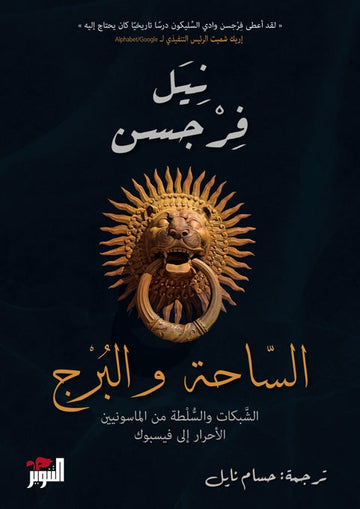
The Square and the Tower: Networks and Power from the Freemasons to Facebook by Neil Ferguson
A distinctive collection



The different oud