mahzlat alaqal albashary
Product details
Dr. Ali al-Wardi wrote this book in separate chapters at different times after the publication of his book "The Preachers of the Sultans." These chapters do not all deal with a single topic, but they are united by the fact that they were written under the influence of the controversy surrounding his aforementioned book. They may please some and anger others. In his articles, Dr. al-Wardi begins with the principle that the new concepts embraced by modern logic are those of movement and evolution. Everything in this universe evolves from one state to another, and there is no stopping this evolution. He argues that it has become incumbent upon preachers to study the laws of this evolution before bombarding people with their resounding sermons.
He therefore does not see this book as glorifying Western civilization or calling for it. Rather, his intention is to say that what is inevitable is inevitable, and that the modern concepts brought by Western civilization are coming without a doubt. He says that it is time to understand the truth before it is too late, as the Islamic world is providing the people with a harsh transitional phase, suffering pains similar to the pains of childbirth. About half a century ago, the world was living in the Middle Ages, then the new civilization came suddenly and began to sweep away most of what was familiar. Therefore, in every Muslim home there is a struggle and argument between the old generation and the new generation. One looks at life through the lens of the tenth century, and the other wants to look at it through the lens of the twentieth century. He adds that he expected thinkers, religious men and others, to help their people through this crisis of childbirth, but on the contrary, they were trying to stand in the way of reform. In light of this, it can be said that the writing is an attempt to establish a new reading in an Islamic society that lives, as the researcher sees it, with the mentality of the past, in an era of development that requires a vision and religious concepts that are in line with that lived reality.
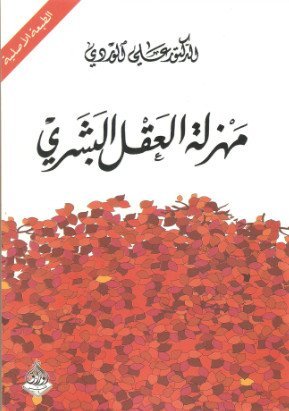
mahzlat alaqal albashary
A distinctive collection
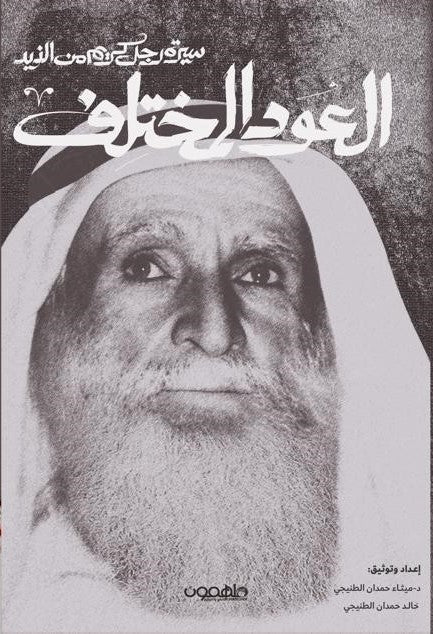
The different oud